
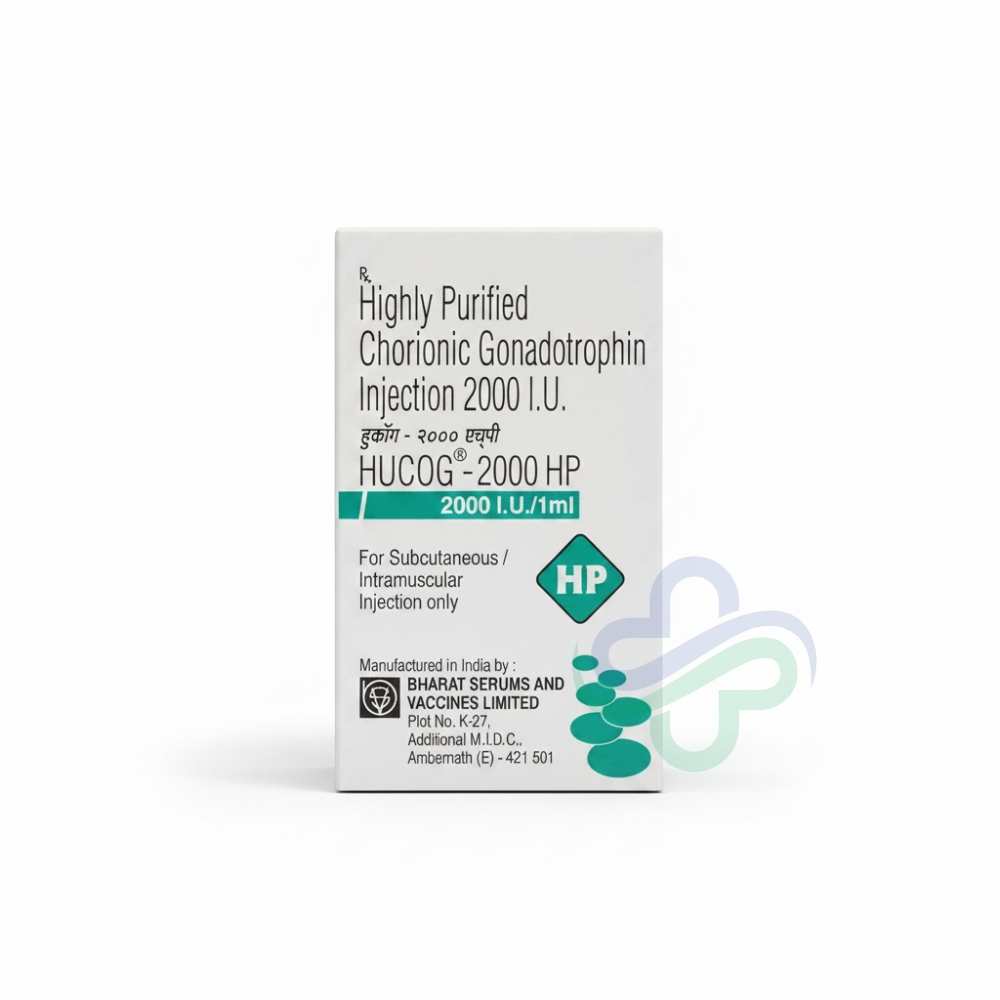
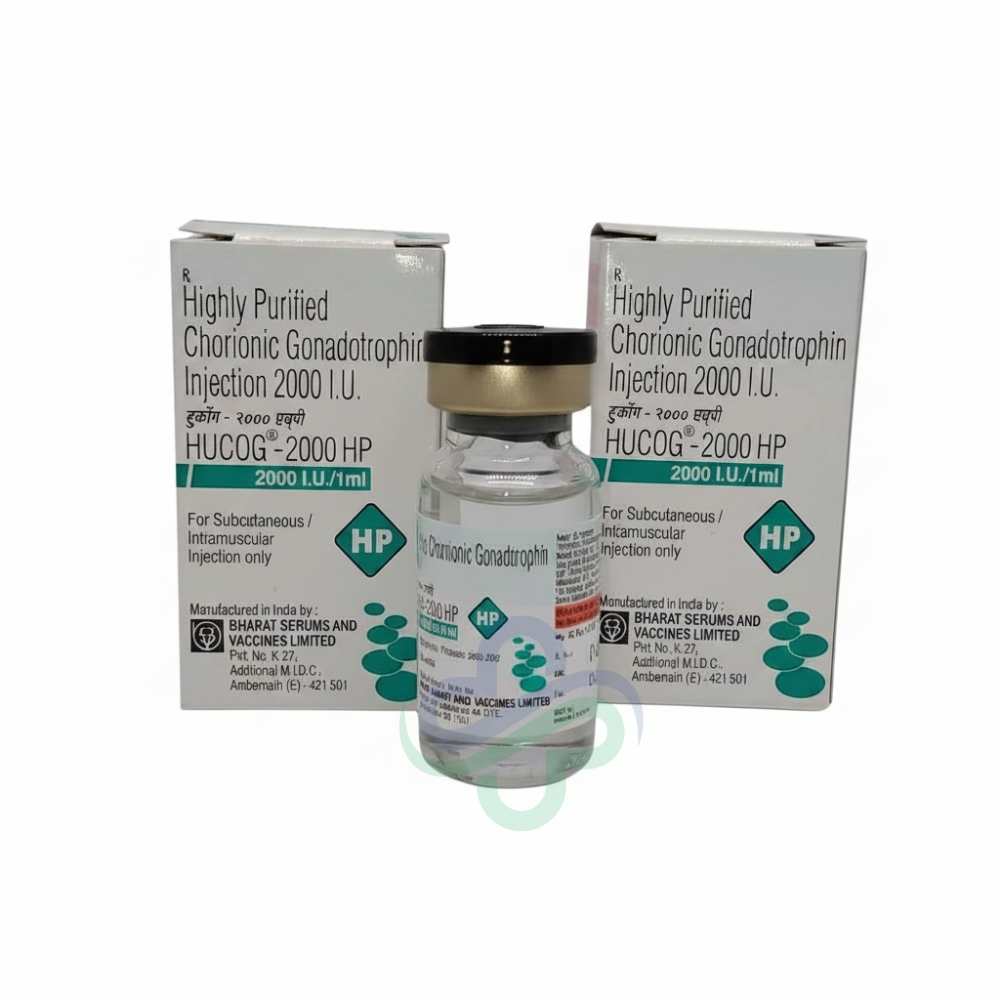
Human Chorionic Gonadotropin HUCOG 2000 IU
Single vial
Free Shipping
Order above $200.00
Worldwide Delivery
8-10 Business Days
24/7 Support
Solve your queries
- 100% Genuine Medicines
- Secure International Logistics
- Secure Payment
- Authentic Pharmaceutical Supplier
How to Order from Medionix Pharma
Add Products
Browse our medicines and add the required products to your cart.
Add Products to Cart
Order Method
Place your order easily through WhatsApp or Email support.
Choose Your Ordering Method
Share Details
Provide your delivery address and contact information.
Share Delivery & Prescription Details
Order Dispatched
Your order is packed securely and shipped worldwide.
Order Confirmation & Dispatch
What is Human Chorionic Gonadotropin (hCG) Used For?
- Human Chorionic Gonadotropin is used for:
- Testicular Cancer Monitoring – As a tumor marker in germ cell tumors
- Hypogonadism Support – Stimulating testosterone production during cancer treatment
- Fertility Preservation – Maintaining testicular function during chemotherapy
- Cryptorchidism – In conjunction with cancer-related treatments
How Does hCG Work?
- Human Chorionic Gonadotropin works by:
- Mimicking luteinizing hormone (LH) action
- Stimulating Leydig cells to produce testosterone
- Supporting spermatogenesis and hormonal balance during cancer therapy
How to Use hCG
Dosage: Variable based on indication; typically 1000-5000 IU 2-3 times weekly
Administration: Intramuscular or subcutaneous injection by healthcare professional
Precaution: May elevate serum markers used in tumor monitoring; coordinate with oncology team; physician supervision required
Side Effects of hCG
Common Side Effects: Injection site reactions, headache, fatigue, mood changes, fluid retention
Serious Side Effects (seek medical help): Blood clots, severe allergic reactions, ovarian hyperstimulation (in females), gynecomastia
Benefits
- Mimics LH — stimulates testosterone production in Leydig cells without exogenous testosterone replacement
- Supports fertility preservation in male cancer patients undergoing gonadotoxic chemotherapy
- Helps maintain testicular volume and spermatogenesis during androgen-suppressive cancer treatments
- Useful for hypogonadism secondary to cancer therapy (chemo-induced hypogonadotropic hypogonadism)
- IM/SC administration offers flexible dosing tailored by oncology/endocrinology teams
Warnings and Precautions
- hCG is itself a tumor marker for germ cell tumors — must coordinate timing with oncology team to avoid confounding tumor marker interpretation
- Gynecomastia in males: testosterone aromatizes to estradiol — monitor and discuss management if breast tissue enlargement occurs
- Ovarian hyperstimulation syndrome (OHSS) in females: serious risk — monitor abdominal pain, bloating, and rapid weight gain
- HBV screening recommended before initiating fertility-related protocols
- Not for use in hormone-dependent tumors where testosterone stimulation could be harmful
- Thromboembolic events possible — assess risk before use
Drug Interactions
- Androgen-deprivation therapy (LHRH agonists/antagonists): hCG directly counteracts ADT — coordinate with oncologist before use in prostate cancer patients
- Gonadotropin-releasing agents: combination effects on LH and FSH must be assessed by endocrinologist
- Monitoring of hCG serum levels alongside tumor markers requires carefully timed blood draws — discuss testing schedule with oncologist
Storage Information
- Store lyophilized powder at 2°C–8°C; protect from light; do not freeze
- Reconstituted solution: store at 2°C–8°C and use within 30 days
- Do not use after expiry date; dispose of unused solution safely
Frequently Asked Questions
Q1: What is hCG 2000 IU used for in oncology?
Human Chorionic Gonadotropin (hCG) 2000 IU is used in oncology as a tumor marker for germ cell cancers, to support testosterone production during cancer treatment, to preserve fertility, and to stimulate testicular function in hypogonadism secondary to cancer therapy.
Q2: How does hCG work to support testicular function?
hCG mimics luteinizing hormone (LH), binding to LH receptors on Leydig cells in the testes. This stimulates testosterone synthesis and supports spermatogenesis, helping maintain hormonal balance during chemotherapy that may suppress gonadal function.
Q3: How is hCG 2000 IU administered?
It is given as an intramuscular (IM) or subcutaneous (SC) injection by a healthcare professional, typically 1000–5000 IU two to three times per week. The exact dose and schedule depend on the indication.
Q4: Can hCG interfere with cancer tumor markers?
Yes. Since hCG is itself a tumor marker for germ cell tumors (testicular cancer, choriocarcinoma), hCG therapy must be carefully coordinated with your oncology team to avoid confounding tumor marker monitoring.
Q5: What are the common side effects of hCG injections?
Common side effects include injection site pain or reactions, headache, fatigue, mood changes, and mild fluid retention. In males, gynecomastia (breast tissue growth) can occur due to increased testosterone and oestrogen levels.
Q6: Can hCG cause gynecomastia in male cancer patients?
Yes. hCG increases testosterone production, which is partly converted to estradiol. This can cause breast tissue growth (gynecomastia) in male patients. Inform your doctor if you notice breast tenderness or enlargement.
Q7: Is hCG used for fertility preservation during chemotherapy?
Yes. In male patients undergoing chemotherapy, hCG can help maintain testosterone levels and testicular function. For female patients, hCG is used in fertility protocols for ovarian stimulation before egg retrieval and freezing.
Q8: What serious side effects require emergency care?
Seek immediate care for: signs of ovarian hyperstimulation syndrome (OHSS) in female patients (severe abdominal pain, bloating, rapid weight gain), severe allergic reactions, blood clot symptoms (leg swelling, chest pain), or signs of precocious puberty in pediatric patients.
Q9: Does hCG interact with other cancer medications?
The use of hCG must be discussed with your oncology team, particularly if you are receiving hormone-affecting therapies. Testosterone changes induced by hCG may interact with androgen-dependent cancer pathways.
Q10: Is hCG 2000 IU suitable for female patients?
hCG 2000 IU can be used in female oncology patients for fertility preservation (triggering ovulation for egg retrieval) or to stimulate hormone production. Dosing protocols differ significantly from male indications.
Q11: How should hCG injection be stored?
Store reconstituted hCG at 2°C–8°C and use within 30 days. Unopened vials should be stored at 2°C–8°C, protected from light. Do not freeze.
Q12: Is a prescription required for hCG 2000 IU?
Yes. hCG is a prescription-only hormone that must be administered under medical supervision. Its use in oncology requires coordination between the oncologist, endocrinologist, and fertility specialist as appropriate.
Customer Reviews
St. Luke's Pharmacy
Canada · 1 month ago
“Consistent quality across multiple procurement orders. Packaging meets international pharmaceutical transport standards fully.”
Dr. Marcus Webb
Australia · 2 months ago
“Reliable source for hard-to-find oncology medications. Packaging was correct for temperature-sensitive biologics throughout transit.”
Dr. Rachel Kim
USA · 1 week ago
“Procured Imatinib for our oncology department. Packaging integrity was intact and cold chain maintained. Professionally handled.”
St. Luke's Pharmacy
Canada · 1 month ago
“Consistent quality across multiple procurement orders. Packaging meets international pharmaceutical transport standards fully.”
Dr. Marcus Webb
Australia · 2 months ago
“Reliable source for hard-to-find oncology medications. Packaging was correct for temperature-sensitive biologics throughout transit.”
Related Products
Disclaimer
The information provided on Medionix Pharma is intended for general informational purposes only. It should not be considered as medical advice, diagnosis, or treatment. Always consult a qualified healthcare professional before using any medication or starting any treatment.
Medionix Pharma does not encourage self-medication. Customers are responsible for ensuring that purchases comply with local laws and prescription requirements in their country. If you have any questions or concerns regarding the content on our website, please contact us at sales@medionixpharma.com.