
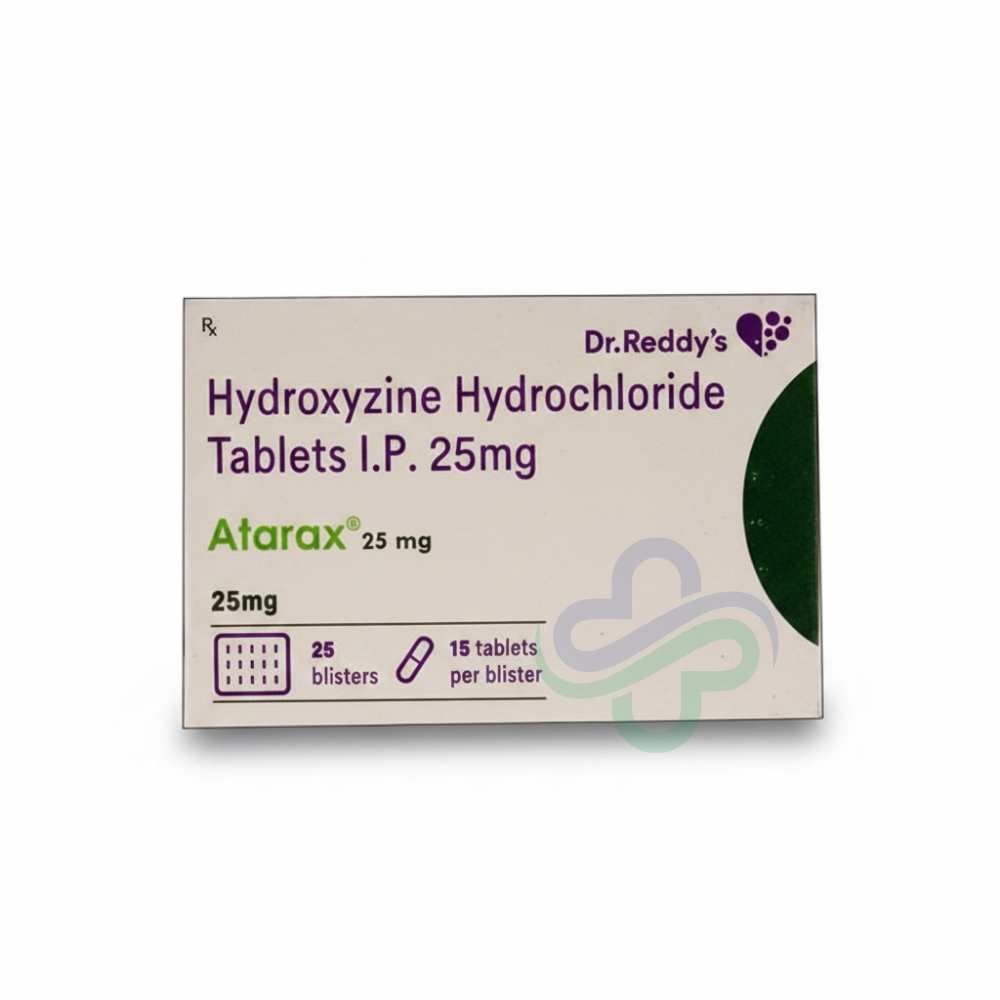
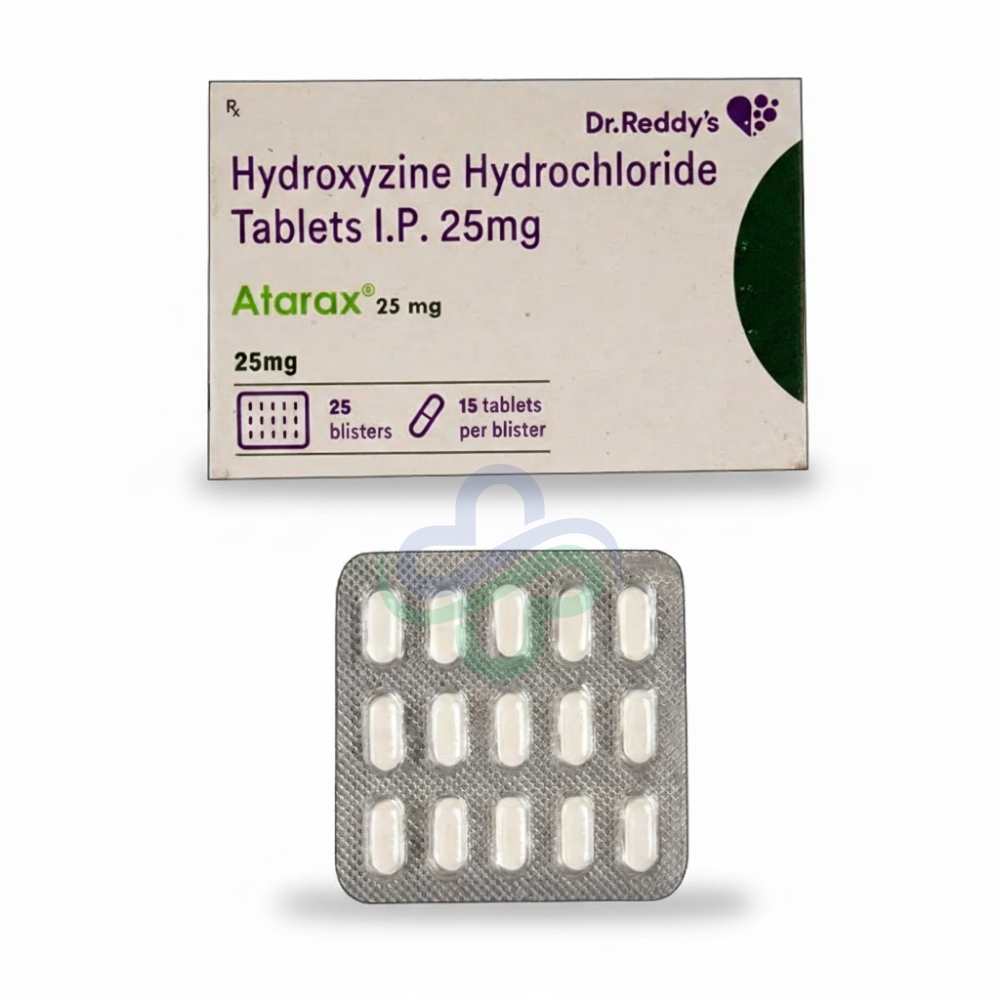
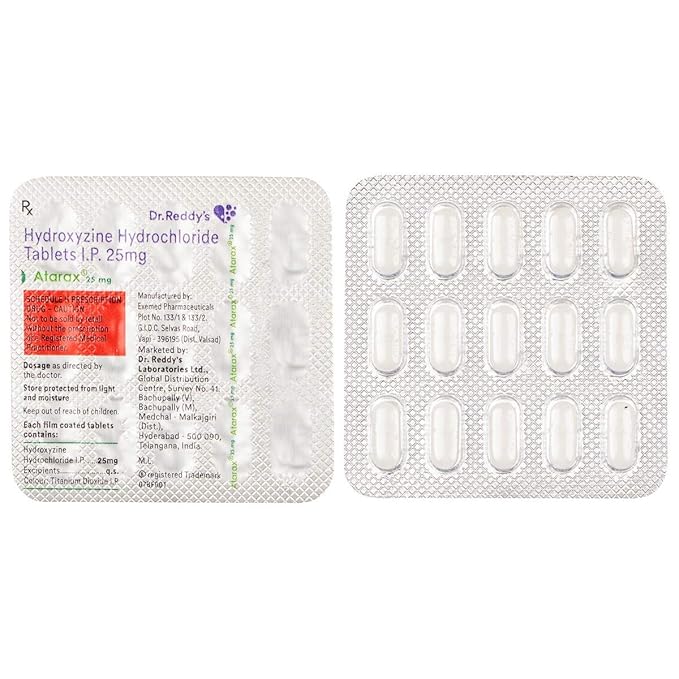
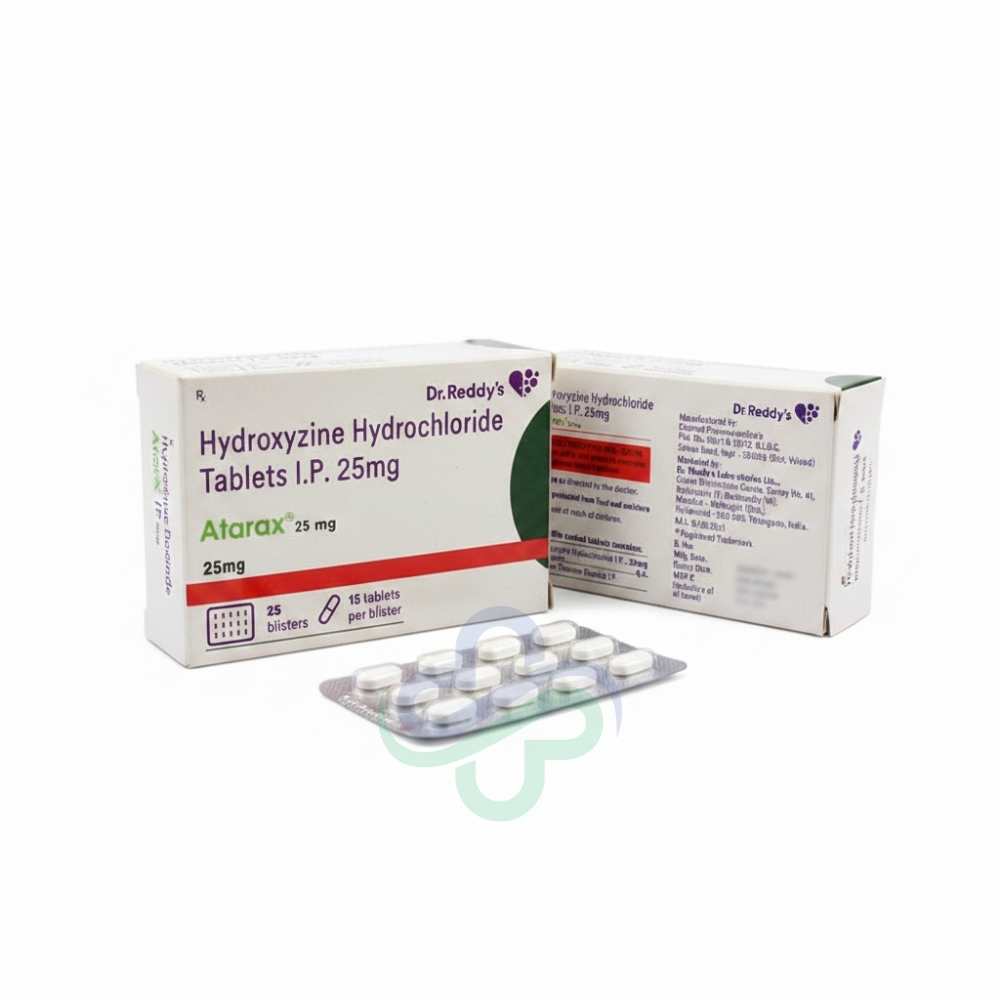
Atarax 25 mg Tablet
Available Pack Sizes
Free Shipping
Order above $200.00
Worldwide Delivery
8-10 Business Days
24/7 Support
Solve your queries
- 100% Genuine Medicines
- Secure International Logistics
- Secure Payment
- Authentic Pharmaceutical Supplier
How to Order from Medionix Pharma
Add Products
Browse our medicines and add the required products to your cart.
Add Products to Cart
Order Method
Place your order easily through WhatsApp or Email support.
Choose Your Ordering Method
Share Details
Provide your delivery address and contact information.
Share Delivery & Prescription Details
Order Dispatched
Your order is packed securely and shipped worldwide.
Order Confirmation & Dispatch
What is Atarax (Hydroxyzine) Used For?
- Atarax (Hydroxyzine) is used for:
- Chemotherapy-Induced Anxiety – Managing anxiety and tension in cancer patients
- Nausea and Vomiting – As antiemetic support during cancer treatment
- Pruritus – Relief of itching associated with cancer or treatment side effects
- Sedation – Pre-procedural sedation before cancer-related procedures
How Does Atarax Work?
- Atarax contains Hydroxyzine, which:
- Acts as an antihistamine with anticholinergic and sedative properties
- Blocks H1 histamine receptors in the central nervous system
- Provides anxiolytic effects without dependency risk of benzodiazepines
How to Use Atarax
Dosage: 25-100mg daily in divided doses as needed
Administration: Take orally with or without food; dosing varies by indication
Precaution: May cause drowsiness; avoid driving or operating machinery; use caution in elderly patients; physician supervision recommended
Side Effects of Atarax
Common Side Effects: Drowsiness, dry mouth, headache, dizziness, fatigue
Serious Side Effects (seek medical help): Severe allergic reactions, QT prolongation, seizures, confusion
Benefits
- Provides effective anxiety and tension relief without the dependence or tolerance risk of benzodiazepines
- Useful antiemetic adjunct to control nausea and vomiting during chemotherapy
- Relieves pruritus (itching) associated with cancer, opioid use, or treatment-related skin reactions
- Rapid onset with good tolerability profile for most cancer patients
- Non-narcotic sedative option for pre-procedural use in oncology settings
Warnings and Precautions
- Causes significant drowsiness — patients must avoid driving or operating machinery during treatment
- Use with caution in elderly patients — increased sensitivity to sedation, confusion, and falls
- QT interval prolongation possible — use with caution in patients with cardiac risk factors or on other QT-prolonging drugs
- Anticholinergic effects (dry mouth, constipation, urinary retention) — use caution in patients with enlarged prostate or glaucoma
- Not recommended during pregnancy — potential fetal harm
- Avoid alcohol and other CNS depressants — additive sedative effects
- Physician supervision recommended especially in oncology settings
Drug Interactions
- CNS depressants (opioids, benzodiazepines, alcohol): additive sedation — dose adjustments may be needed
- Anticholinergic drugs: additive anticholinergic effects (dry mouth, constipation, urinary retention)
- QT-prolonging drugs (certain antiemetics, antiarrhythmics): increased cardiac risk — avoid combination
Storage Information
- Store at room temperature 15°C–25°C, protected from light and moisture
- Keep in original packaging, out of reach of children
- Do not use after expiry date
Frequently Asked Questions
Q1: What is Atarax 25mg (Hydroxyzine) used for in cancer care?
Atarax is used as supportive therapy in oncology to manage chemotherapy-related anxiety, nausea, and pruritus (itching from cancer or opioid treatment), and as pre-procedural sedation before cancer-related interventions.
Q2: How does Atarax work?
Hydroxyzine blocks H1 histamine receptors and exerts central nervous system depressant effects, providing antihistamine, anxiolytic, antiemetic, and sedative actions without the dependence risk of benzodiazepines.
Q3: What conditions does Atarax specifically help with in oncology?
In cancer care, Atarax addresses: anxiety and tension during treatment, chemotherapy-induced nausea (as an adjunct), pruritus from opioid analgesics or skin reactions, and sedation before biopsies, imaging, or minor procedures.
Q4: How is Atarax 25mg administered?
It is taken orally, typically 25mg 3–4 times daily (up to 100mg total daily dose), with or without food, as directed by your physician. Dosing is individualised based on symptom severity and patient tolerance.
Q5: How long is Atarax used in cancer patients?
Atarax is generally used on an as-needed basis or for short-to-medium term symptom management. The duration is determined by your physician based on ongoing symptom control needs.
Q6: What are the most common side effects of Atarax?
Common side effects include drowsiness (most frequent), dry mouth, headache, dizziness, and fatigue. These are generally mild and related to the antihistaminic and anticholinergic properties of the drug.
Q7: What serious side effects require emergency care?
Seek urgent medical attention for: severe allergic reactions (rash, swelling, difficulty breathing), irregular heartbeat or palpitations (QT prolongation), seizures, or acute confusion especially in elderly patients.
Q8: What drugs interact with Atarax?
Atarax's sedation is enhanced by opioids, benzodiazepines, and alcohol — combinations require caution. Anticholinergic drugs add to dry mouth/constipation effects. QT-prolonging drugs increase cardiac risk.
Q9: Is Atarax safe during pregnancy?
Atarax is not recommended during pregnancy, particularly in early pregnancy (first trimester). It is also not recommended during breastfeeding. Discuss alternatives with your physician if pregnant.
Q10: What monitoring is needed during Atarax treatment?
Routine monitoring is not usually required for short-term use. In patients with cardiac risk factors or on multiple medications, an ECG to monitor QT interval may be advised. Elderly patients should be monitored for excess sedation and falls.
Q11: How should Atarax be stored?
Store at room temperature 15°C–25°C, protected from light and moisture, in the original packaging. Keep out of reach of children and do not use after the expiry date.
Q12: Is Atarax available without a prescription?
Atarax requires a physician prescription. In an oncology setting, it is prescribed by your oncologist or supportive care physician as part of a comprehensive symptom management plan.
Customer Reviews
Northside Medical Center
Australia · 3 weeks ago
“Routine oncology supply order. Medications arrived temperature-controlled and within the stated delivery window. Highly reliable.”
Regional Cancer Institute
USA · 6 weeks ago
“Used Medionix for supplementary oncology supply for over a year now. Reliable, consistent quality and timely delivery.”
Dr. Fatima Al-Rashid
UK · 3 months ago
“Trusted source for specialist oncology procurement. Products always arrive within expiry in manufacturer-sealed packaging.”
Northside Medical Center
Australia · 3 weeks ago
“Routine oncology supply order. Medications arrived temperature-controlled and within the stated delivery window. Highly reliable.”
Regional Cancer Institute
USA · 6 weeks ago
“Used Medionix for supplementary oncology supply for over a year now. Reliable, consistent quality and timely delivery.”
Related Products
Disclaimer
The information provided on Medionix Pharma is intended for general informational purposes only. It should not be considered as medical advice, diagnosis, or treatment. Always consult a qualified healthcare professional before using any medication or starting any treatment.
Medionix Pharma does not encourage self-medication. Customers are responsible for ensuring that purchases comply with local laws and prescription requirements in their country. If you have any questions or concerns regarding the content on our website, please contact us at sales@medionixpharma.com.