
Introduction
Eye strain from screens has become one of the fastest-growing modern health problems. Phones, laptops, tablets, gaming monitors, and long office hours mean millions of people now spend most of their day staring at digital displays. That is why searches like eye strain from screens, computer vision syndrome, how to reduce eye strain fast, screen headache symptoms, and digital eye strain treatment continue rising every year.
If your eyes feel tired, dry, heavy, blurry, sore, or you develop headaches after screen use, you are not imagining it. Your eyes are reacting to prolonged visual stress.
The good news is that screen-related eye strain is highly manageable when you understand what causes it and use the right habits daily.
What is Eye Strain from Screens?
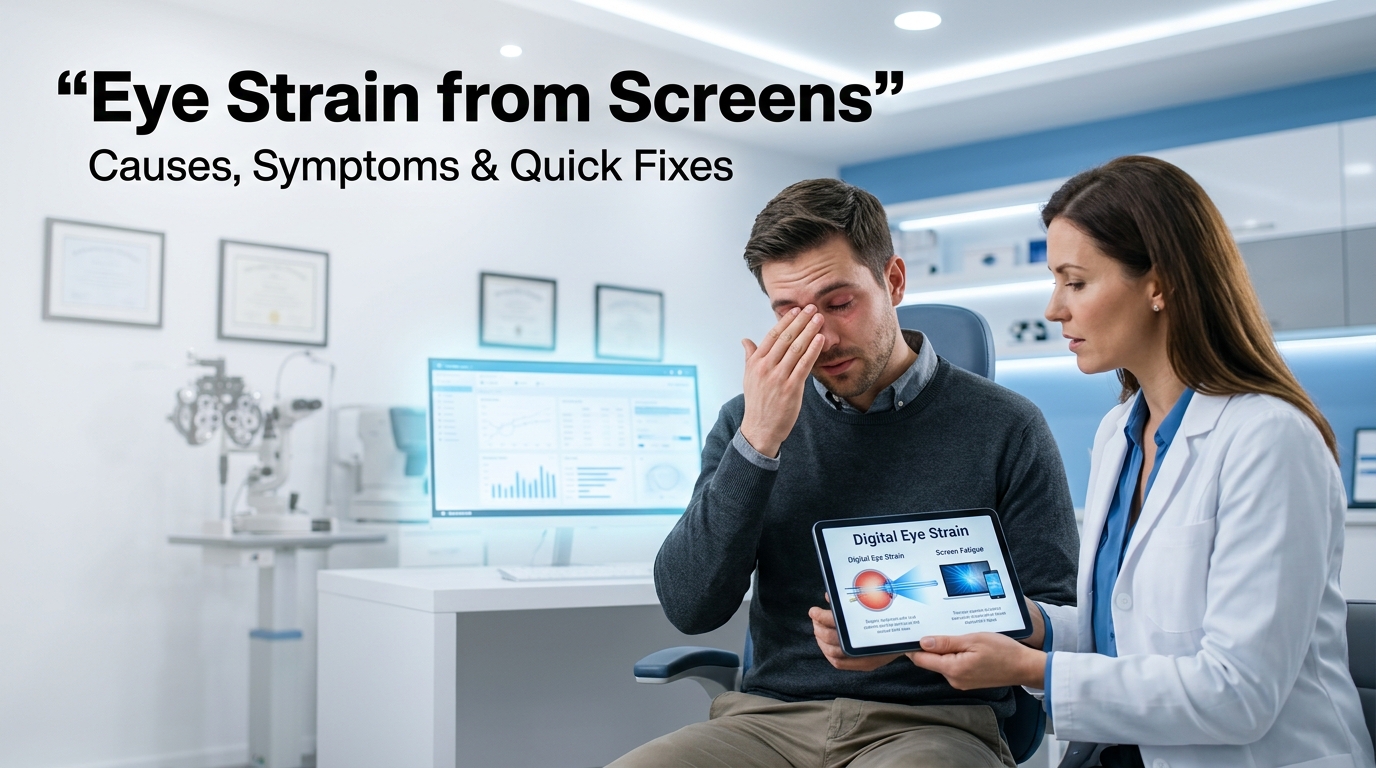
Digital eye strain, also known as computer vision syndrome, happens when the eyes work too hard for too long while focusing on screens. Unlike reading a book, screens involve glare, flicker, blue light exposure, changing contrast, poor posture, and reduced blinking.
Your eyes were not designed to stare at glowing rectangles for 8 to 14 hours a day. That mismatch creates fatigue.
Main Causes of Screen Eye Strain
1. Reduced Blinking
People blink far less when using screens. Normal blinking keeps the eyes lubricated. Reduced blinking leads to dryness, burning, irritation, and blurry vision.
2. Continuous Near Focus
Staring at close objects for long periods forces focusing muscles to stay active. Like any muscle, they tire over time.
3. Blue Light and Glare
Bright screens, reflections, poor contrast, and harsh lighting increase visual stress. Blue light itself is often oversold, but brightness and prolonged exposure matter.
4. Poor Screen Setup
Wrong screen height, bad distance, tiny text, and poor posture create neck pain plus eye fatigue.
5. Long Unbroken Sessions
Working 2 to 4 hours straight without breaks is a common mistake.
Common Symptoms of Digital Eye Strain
Dry eyes or burning sensation
Blurred vision after screen use
Heavy eyelids and tired eyes
Headaches, especially around forehead or temples
Red eyes
Difficulty refocusing when looking away
Neck and shoulder pain
Light sensitivity
Quick Fixes That Actually Work
1. Use the 20-20-20 Rule
Every 20 minutes, look at something 20 feet away for 20 seconds. This relaxes focusing muscles and is one of the simplest eye strain relief tips.
2. Blink Intentionally
Yes, seriously. Many people unconsciously stare without blinking enough.
3. Adjust Screen Distance
Keep screens roughly an arm’s length away and slightly below eye level.
4. Increase Text Size
If you squint to read, your setup is wrong.
5. Lower Brightness
Match screen brightness to room lighting instead of max brightness all day.
6. Use Lubricating Eye Drops
Helpful if dryness is a major symptom.
7. Improve Posture
Bad neck position often worsens headaches blamed on eyes.
Best Daily Habits for Office Workers & Students
Take micro-breaks every hour
Use dark mode only if comfortable
Sleep enough — tired eyes strain faster
Stay hydrated
Get regular daylight exposure
Limit pointless scrolling after work
When to Take It Seriously
If blurry vision persists, headaches are frequent, one eye hurts, or symptoms remain even without screens, stop guessing and get a professional eye check. It may be prescription changes, dry eye disease, migraine, or another issue.
Need Help Finding Eye Care Solutions?
For healthcare product inquiries, sourcing support, or wellness assistance, contact Medionix Pharma by WhatsApp or email.
Conclusion
Eye strain from screens is common because modern habits are brutal on the eyes. The fix is not magical drops alone—it is smarter screen behavior, proper setup, regular breaks, and better recovery habits.
Your screens are not going away. Your habits must improve.
Contact Medionix Pharma today for healthcare product inquiries and support.